
O BOM LIVRO
O livro é uma tradução do "The Talking Book" na língua inglesa que demonstra o quanto a fé cristã, e mais especificamente o contato com o texto bíblico, serviu de antídoto para muitas pessoas escravizadas contra a instrumentalização da própria fé cristã a servico do escravagismo, no contexto protestante dos Estados Unidos da América do Norte.
Nesse sentido, o princípio protestante de maior acesso dos fiéis ao Texto Sagrado possibilitou aos afro-amercanos a construção de uma longa tradição cristã de luta contra a escravidão. Isso nos ajuda a entender as diferenças com o Brasil.
O texto é uma contribuição importante para a Teologia Negra e para pensarmos criticamente o Cristianismo no Brasil, em relação à negritude, de modo particular aquele estabelecido por missionários protestantes estadunidenses.
Reviews of "O Bom Livro":
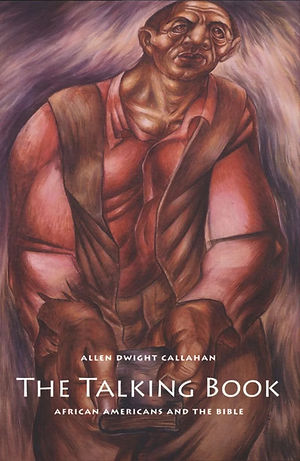
THE TALKING BOOK
The Talking Book casts the Bible as the central character in a vivid portrait of Black America, tracing the history of African American Interpretation of the Bible over time from slavery's secluded forest prayer meetings to the bright lights and bold style of today's hip-hop artists.
From a variety of perspectives this wide-ranging book is the first to explore the Bible's role in the triumph of the Black experience. Using the Bible as a foundation, African Americans shared religious beliefs, created their own music, and shaped the ultimate key to their freedom—literacy. Allen Callahan highlights the intersection of biblical images with African American music, politics, religion, art, and literature to tell a moving story how a biblically informed African American culture became one of the most important forces of twenty-first-century America.

A LOVE SUPREME
Callahan suggests that scholars have wrongly placed the sequence and therefore the importance of the works collectively known as the Johannine tradition - the Gospel of John and the Johannine Epistles. His proposal includes literary, theological, and historical analysis as he argues for the reevaluation of a significant part of the Biblical canon.
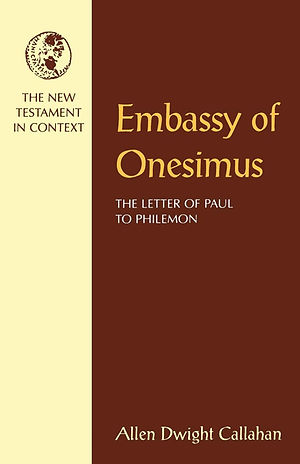
EMBASSY OF ONESIMUS:
The Letter of Paul to Philemon
Virtually all modern commentaries on Philemon posit that the letter treats the case of Onesimus, a pilfering runaway slave, who Paul is attempting to rehabilitate in the eyes of Philemon, his rightfully angry master.
In this landmark commentary, however, Allen Callahan's reading provides a new interpretation shared by several nineteenth-century American abolitionist interpreters. Here, then, is not the story of a runaway slave but a story of the estrangement of two Christina brothers, Onesimus and Philemon. This alternative reading offers a paradigm for Christian reconciliation that necessarily includes diplomacy, persuasion, forbearance, and reparations for injured parties. And that the letter speaks of the challenging implications of Christian love and the imperative of Christian justice.